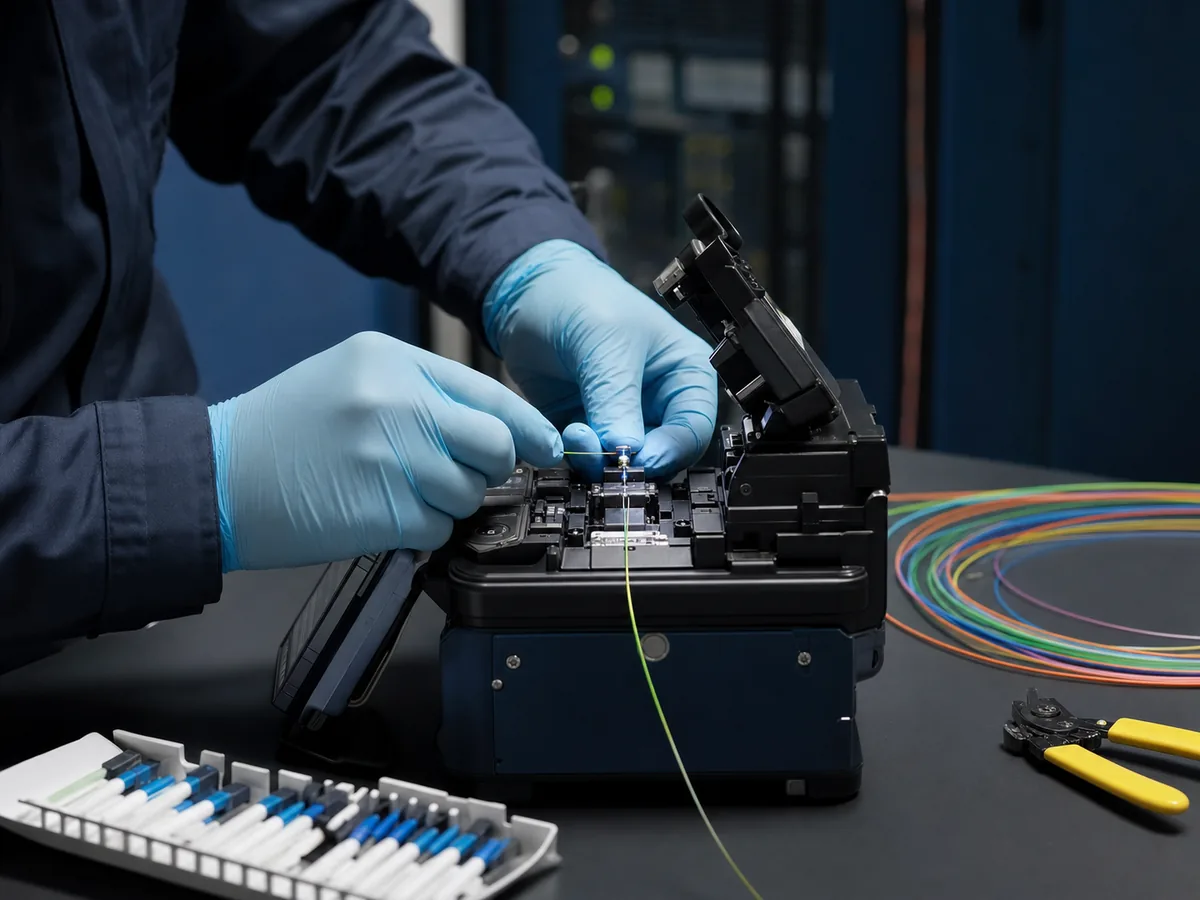
 Illustrative technical detail
Fiber backbone links
Define the link before selecting the fiber.
Fiber type, strand count, connectors, enclosures, pathways, equipment, and testing should align with the purpose of the link.
Explore fiber cabling →Commercial network infrastructure / Bowling Green, Kentucky
Bowling Green Network Cabling plans organized copper and fiber infrastructure for offices, warehouses, retail spaces, and commercial facilities throughout Bowling Green and Warren County.
Tell us where the project is, what needs to connect, and when the space needs to be ready.
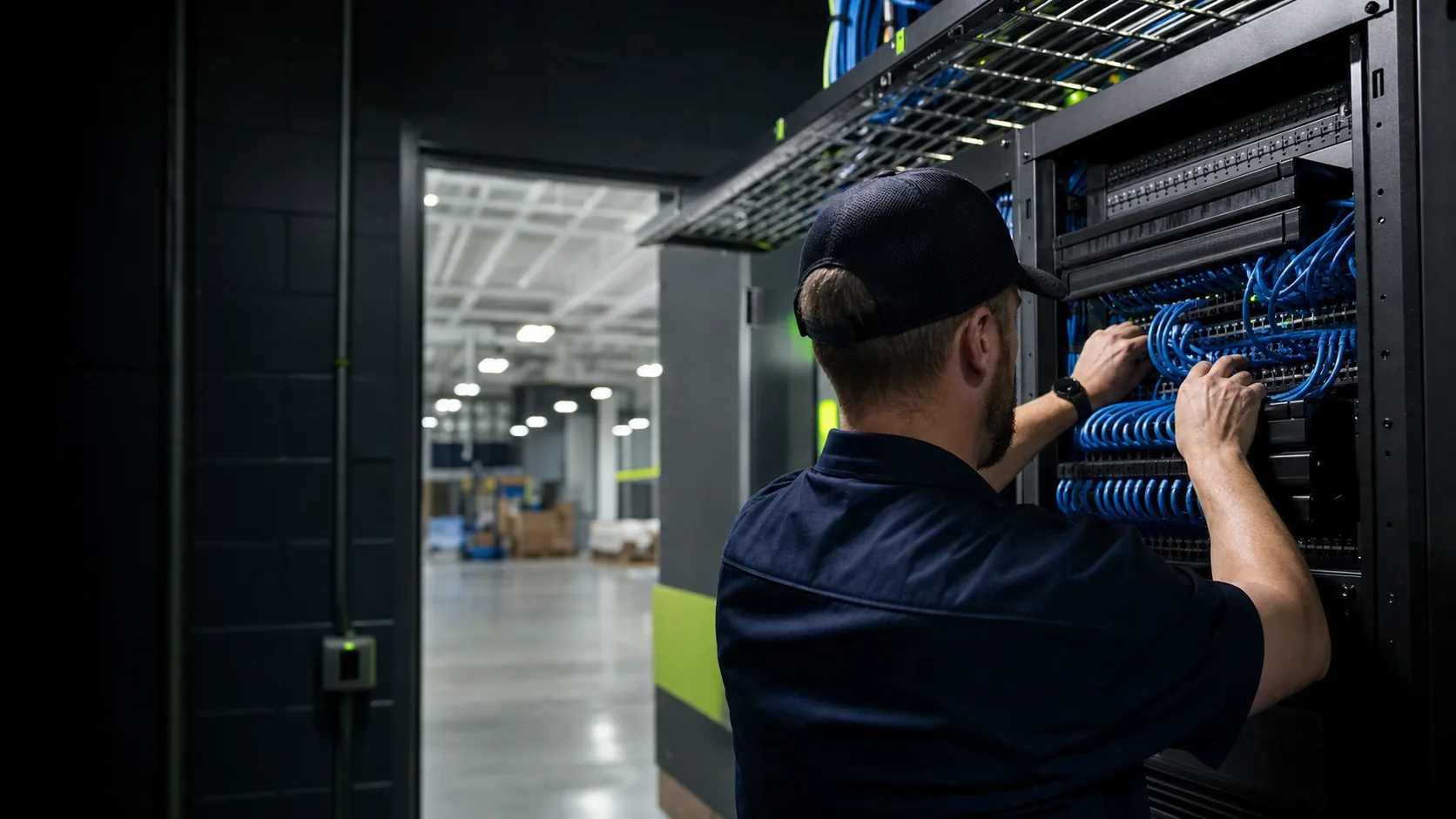 Representative project environment
Planning-first cabling
Good cabling starts before the first cable is pulled. Review where people and devices work, how each route will travel, where connections terminate, and what may need to grow later.
Identify workstations, access points, equipment, and other devices that need physical connections.
Review ceilings, pathways, transitions, work zones, access hours, and the serving network room.
Define racks, patch panels, jacks, labels, testing, and documentation.
Separate cabling from active equipment, network configuration, electrical work, and construction responsibilities.
Physical network infrastructure
Focused copper and fiber scopes for facilities that need new connections, stronger backbones, cleaner termination spaces, or carefully planned changes.
Coordinated pathways, cable, terminations, labeling, and handoff for connected commercial spaces.
SERVICE / 02New data drops, relocations, and additions for offices, warehouses, retail, and commercial facilities.
SERVICE / 03Fiber pathways, termination, splicing, and testing for backbones, long routes, and inter-building connections.
SERVICE / 04Racks, patch panels, pathways, and cable management arranged for clearer service and expansion.
SERVICE / 05Network cabling routed to planned access-point positions in offices, warehouses, and commercial facilities.
SERVICE / 06Practical cabling changes for office moves, expansions, remodels, and inherited network rooms.
Field notes
Cable selection, pathway conditions, access, labels, testing, and documentation shape how usable the infrastructure remains.
Illustrative technical detailFiber backbone links
Fiber type, strand count, connectors, enclosures, pathways, equipment, and testing should align with the purpose of the link.
Explore fiber cabling →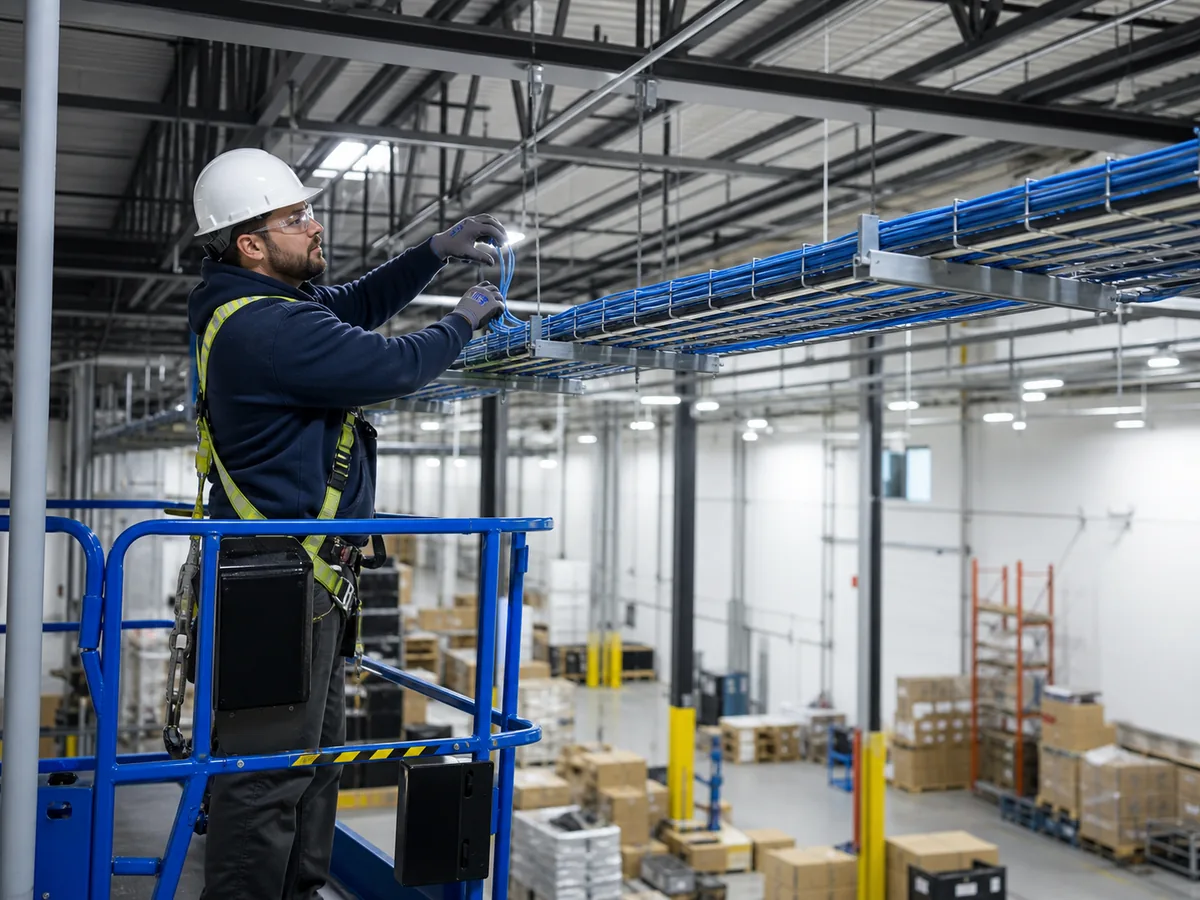 Representative environment
Warehouse pathways
High ceilings, lifts, production schedules, work zones, and long routes should be reflected in the project plan.
Explore structured cabling →Project sequence
A defined sequence keeps rooms, routes, quantities, responsibilities, and timing visible to everyone involved.
Send plans, photographs, device counts, the project location, and target schedule.
Review endpoint locations, pathways, distances, rack positions, and access conditions.
Define materials, quantities, responsibilities, timing, testing, and documentation.
Complete the approved work and provide the agreed labels, test results, or records.
Primary service area
Projects may range from downtown offices and retail spaces to warehouse, manufacturing, and commercial properties throughout the county. Availability depends on location, scope, and schedule.
Common planning questions
Clear answers help define a better project scope. Final materials and methods should be confirmed for the actual facility.
Typical scopes include structured copper cabling, Cat6 and Cat6A drops, fiber backbones, Wi-Fi access-point cabling, and network rack work.
Often, yes. Access hours, sensitive areas, and shutdown restrictions should be discussed during planning.
The appropriate cable depends on expected speeds, run length, pathway space, interference, equipment, and future plans.
Fiber is commonly considered for backbones, longer routes, inter-building links, higher capacity, and electrically noisy environments.
Yes. The cabling scope can define locations, pathways, racks, demarcation points, and handoff responsibilities.
The primary service area is Bowling Green and Warren County, Kentucky. Other projects depend on location, scope, and schedule.
Start the scope